


Groov founder Dan Cataldi didn’t start with complete confidence that his idea would succeed. His journey from corporate life to personalized footwear shows how entrepreneurs can build conviction through customer validation, experimentation, strong teams, operational readiness, and a willingness to act before every uncertainty disappears.
Founder stories often become much neater after the company starts succeeding. The doubt gets edited out, the false starts disappear, and decisions that were uncertain at the time are retold as if they were part of a master plan from the beginning.
Dan Cataldi’s path to building Groov is more interesting because it was nothing like that.
Before becoming an entrepreneur, Cataldi had a corporate career that looked impressive from the outside. He had considerate managers, exposure to senior executives, and the kind of résumé many ambitious professionals spend years trying to build. The problem was that the work did not feel connected to what he actually wanted to do with his life.
Eventually, that disconnect became difficult to ignore. After what he initially feared was a serious medical emergency was diagnosed as a panic attack, Cataldi took six weeks away from work and began reconsidering the path he was on. During that period, he found himself returning to something he had wanted since childhood: he had always imagined becoming an inventor.
That realization did not lead to an impulsive resignation and an instant startup. Cataldi eventually went to Wharton, where an Innovations class helped him develop the idea that became Groov, a personalized footwear company that uses smartphone scanning technology to create custom insoles. He kept working on the idea after the class ended, eventually landing the University of Alabama football team as a paying pilot customer and putting his MBA on hold to build the company full-time.
The full story is worth reading in Cataldi’s own words in our Q&A with Dan Cataldi on StartingUpTips. There is also a companion PowerHomeBiz profile examining Cataldi’s journey from panic attack to product-market fit.
For Learning From Big Boys, though, the bigger question is what other entrepreneurs can take from the way Groov was built. Cataldi’s experience offers lessons about customer validation, product development, leadership, publicity, perfectionism, and perhaps most importantly, how confidence often develops only after you start moving.
Key Takeaways
- Customer behavior matters more than compliments. Purchases, repeat purchases, referrals, usage, and refunds tell founders far more than someone saying an idea sounds great.
- The best technology can feel almost invisible. Good technology should make the customer’s life easier. The more complicated the work behind a product is, the less complexity the customer should have to deal with.
- Founders don’t have to be experts at every job. Leadership is often about getting talented people aligned around the same customer problem and company mission.
- Publicity only helps when the business is ready to capture it. Groov’s experience with Von Miller shows why startups need a functioning destination for sudden attention.
- Perfectionism can become a liability. Early-stage companies need to experiment, observe, correct, and keep moving instead of treating every decision as permanent.
- Conviction develops through evidence. You test something, customers respond, you learn, and your confidence becomes progressively more grounded in reality.
Table of Contents
1. A Career Can Look Successful and Still Be the Wrong One
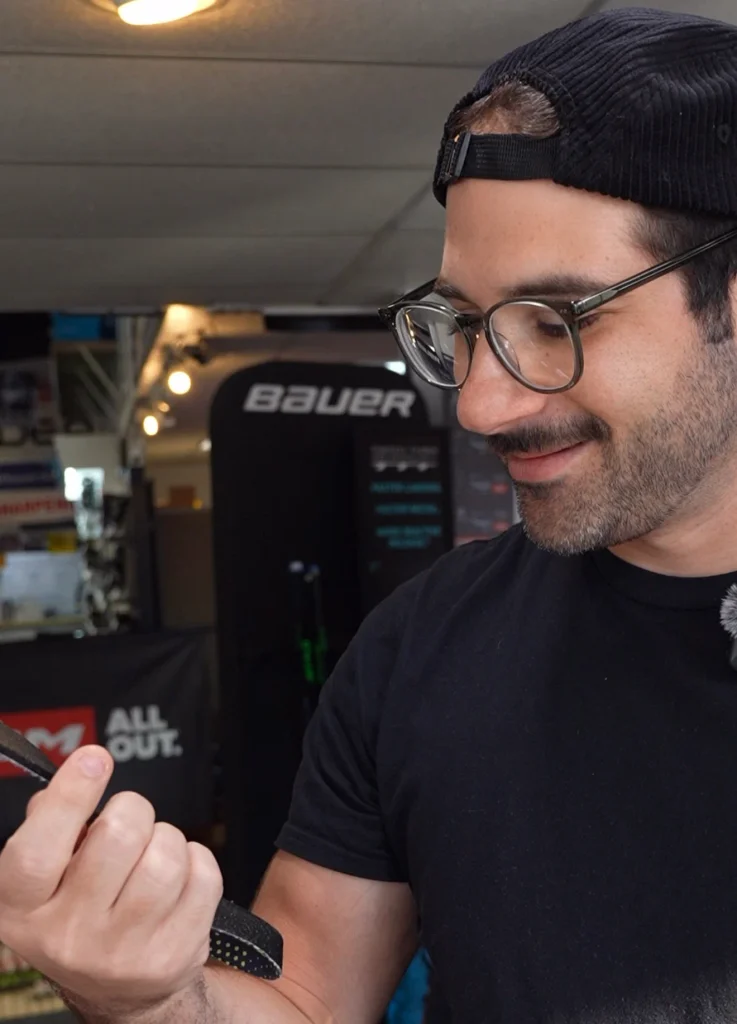
One of the more relatable parts of Cataldi’s story is that he was not escaping an obviously terrible job. On paper, his career was going well. He had supportive managers, responsibility, access to senior leaders, and professional credibility.
That actually made his dissatisfaction harder to confront. Cataldi says pursuing his own ambitions frightened him, so he buried himself in work and task perfectionism instead. He could concentrate on performing well today rather than asking the more uncomfortable question of whether he wanted to spend the next decade doing the same thing.
There is a useful distinction here for entrepreneurs. Being good at something does not necessarily mean it is the work you want to build your life around. At the same time, recognizing that something is wrong does not require an immediate, dramatic leap into entrepreneurship.
Cataldi’s transition unfolded gradually. He took time away, confronted what he wanted, returned to work, attended business school, tested an idea, found customers, and gathered more reasons to take the next step. His story is much closer to how major career changes usually happen: not through one fearless decision, but through a series of smaller decisions that gradually become harder to reverse.
2. Look for the Assumption Everyone Else Has Stopped Questioning
The idea for Groov came partly from a category Cataldi had been around for years. His father sold orthotics and had encouraged him to wear them, but Cataldi wanted nothing to do with them when he was a Division I athlete. He associated orthotics with medical problems rather than performance.
His attitude changed after a back problem led him to a specialist who made him a different pair of custom orthotics. Around the same time, Cataldi began noticing how seriously elite athletes treated their customized inserts, even when they were willing to give away the expensive shoes around them.
That observation challenged a familiar assumption. The footwear industry puts enormous attention on the shoe itself: the brand, cushioning, materials, fit, design, and latest technology. Yet some of the athletes with the greatest access to footwear technology seemed particularly concerned about the surface hidden inside the shoe.
Instead of simply asking how to make another insole, Cataldi began asking how the personalization available to elite athletes could be made accessible to ordinary consumers.
That is a useful approach to finding business opportunities. Entrepreneurs do not always need to invent a need nobody has ever seen before. Sometimes the opportunity is hiding inside a product, process, or industry convention that customers have accepted simply because “that’s how it has always been done.”
The harder question comes next: does anyone care enough about your alternative to pay for it?
3. Customer Compliments Aren’t the Same as Customer Validation
This is where Cataldi’s story becomes particularly useful for founders who are still deciding whether an idea has a market.
Early Groov prototypes went under the feet of classmates, athletes, nurses, people experiencing chronic discomfort, and people who had barely thought about insoles before. Cataldi listened to what they said, but the company eventually learned to put more weight on what people actually did.
The University of Alabama football team became a paying pilot customer. Early consumers began buying additional pairs for different shoes. Cataldi says Groov reached its first thousand customers before receiving its first refund. Those behaviors provided much stronger evidence than people simply saying the product was interesting.
The distinction matters because people are usually polite when talking directly to a founder. Friends, colleagues, potential customers, and even strangers may genuinely like an idea without liking it enough to change their behavior or spend money.
The U.S. Small Business Administration’s guidance on market research makes the same basic point from a planning perspective: understanding consumer behavior, market demand, competition, and customer characteristics helps entrepreneurs confirm and improve an idea before committing more heavily to it.
We have seen the opposite outcome in another Learning From Big Boys case study. Revolymer’s nonstick chewing gum was a clever technical innovation, but the product struggled commercially because the people buying chewing gum did not feel strongly enough about the cleanup problem the technology solved. The science worked; the market signal was weaker.
Groov’s early traction illustrates the other side of that lesson. The strongest validation is not someone telling you, “I love this.” It is someone paying for it, using it, coming back for another one, or recommending it to someone else.
4. The More Complicated the Technology, the Simpler the Experience Should Feel
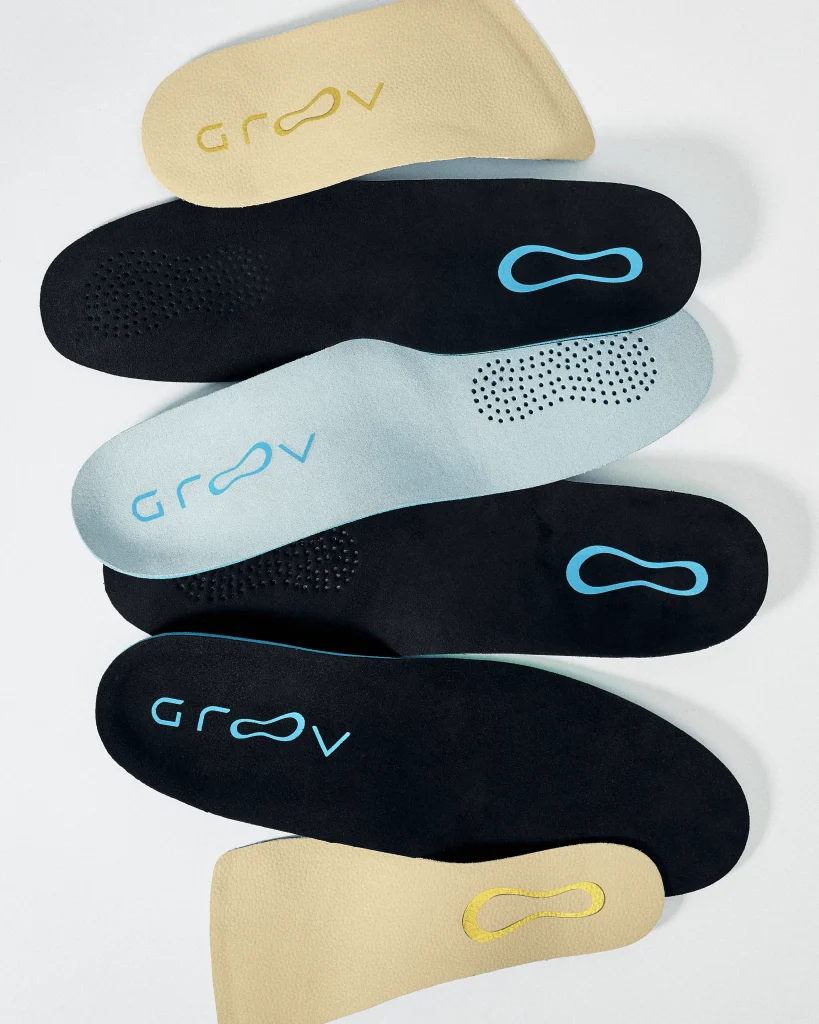
Personalized footwear sounds straightforward when reduced to a marketing sentence. Building it at scale is considerably more complicated.
Groov had to figure out how to capture useful three-dimensional information about a person’s feet outside a controlled clinical setting. Customers could be scanning in different rooms, under different lighting, holding their phones differently and moving during the process. The company then had to translate that information into a physical product while accounting for different shoes and use cases.
Yet customer research revealed that people did not want to experience all of that complexity. They did not want a biomechanics lecture, a complicated fitting procedure, or another app they had to manage. They wanted something that worked and was easy to understand.
Groov therefore tried to make the customer-facing experience much simpler than the technology behind it. Customers with compatible iPhones complete guided foot scans, while much of the complexity happens out of sight.
That ability to hide complexity is often what separates useful innovation from technology that impresses its creators but frustrates its customers. A restaurant customer does not want to understand the logistics system behind a 20-minute delivery. A software customer does not necessarily care how complicated the infrastructure is. They care that the product solves their problem without creating three new ones.
Groov received outside recognition for the technology as well. Wharton named Groov a 2023 winner of its AI for Business Award, highlighting its use of mobile depth-mapping technology to create customized inserts.
For entrepreneurs, though, the bigger lesson is not “use sophisticated technology.” It is almost the opposite: use sophisticated technology when necessary, but do not make customers feel responsible for understanding it.
5. Founders Don’t Have to Play Every Instrument
Moving from corporate strategy into a physical consumer-product startup also forced Cataldi to rethink what it meant to be the founder.
He could not write Groov’s computer-vision code. He was not personally manufacturing every pair of insoles. He even joked in the interview that keeping track of the company’s FedEx login was sometimes enough of a challenge.
His contribution increasingly became connecting the pieces.
Cataldi described himself as a conductor who had played a little clarinet in middle school. The conductor does not need to outperform every musician. The job is to make sure the right people are playing the right song together.
That transition can be difficult for small-business founders because doing everything personally often works at the beginning. You answer the customer emails, update the website, talk to suppliers, review expenses, package orders, make sales calls, and fix whatever went wrong that morning.
Eventually, however, being involved in every detail stops being proof of commitment and starts becoming a bottleneck.
The founder’s role has to evolve toward connecting specialists, protecting priorities, understanding customers, and making sure everyone understands why the company is building what it is building.
A similar theme appears in the stories of founders covered on WomenHomeBusiness. In Kecia Hielscher’s Formulary 55 entrepreneur interview, Hielscher discusses growing an existing consumer brand while making decisions about products, marketing, cash flow, distribution, and the identity customers already valued. Different business, same underlying challenge: once a company grows beyond a founder’s individual effort, leadership becomes a matter of deciding what deserves attention and what should be entrusted to other people.
6. The Lucky Break Usually Has a Lot of Work Behind It
One of the most memorable stories from Groov’s early years happened at the NFL Sack Summit in Las Vegas.
Cataldi heard that the event might give Groov access to elite football players, so he went without knowing whether anything substantial would come from the trip. He began scanning players’ feet and offering to make them pairs.
Eventually, one of those players was Von Miller.
Cataldi estimates that he had Miller’s attention for only about a minute. Almost all of that time went into scanning his feet, leaving only enough time for a very simple pitch: Miller received products constantly, but Cataldi believed that if he actually tried these, the product would speak for itself.
Then the moment was over.
Several weeks later, Cataldi was in Costa Rica when his phone suddenly filled with notifications. Miller had received the product, tried it, liked it, and told his Instagram audience about it. According to Cataldi, that unsolicited mention generated roughly 10,000 signups for Groov’s pre-launch waitlist. Miller later became an investor and brand ambassador.
It is easy to look at that outcome and call it luck. There was certainly luck involved; Cataldi could not control whether Miller would like the product or decide to talk about it publicly.
What he could control was showing up in Las Vegas, putting himself in a room where interesting connections might happen, having something ready for people to try, following through with the product, and making sure it was good enough to survive after the sales pitch ended.
Entrepreneurs cannot engineer every lucky break. They can increase the number of places where luck has a chance to find them.

7. Viral Attention Isn’t Worth Much if You Have Nowhere to Send It
Ten thousand signups arriving unexpectedly sounds like the problem every startup wants. It can also expose weaknesses very quickly.
Groov benefited from the fact that the sudden traffic was going to a pre-launch waitlist. The company could capture interested prospects without immediately promising to manufacture and fulfill thousands of personalized orders it might not yet have been ready to handle.
Cataldi’s advice to other founders is therefore practical: before dreaming about the influencer post, television appearance, viral TikTok, or major press feature, make sure people will have somewhere useful to go afterward.
That means having a clear website, understandable messaging, a working checkout or lead form, a waitlist if necessary, and a plan for communicating what happens next. A business may not be able to fulfill a sudden wave of demand immediately, but silence and confusion can turn excitement into frustration very quickly.
There is another opportunity hidden inside a traffic spike. Pay attention to which message attracted people, where they came from, what they clicked, what they asked, and where they dropped out. A viral moment can function as an unusually concentrated customer-research exercise.
The exposure may last 24 hours. What you learn from it can influence the business long after everyone else has moved on.
8. Genuine Advocacy Beats Manufactured Excitement
The other interesting part of the Von Miller story is what did not happen initially. Cataldi says Miller was not paid to make the original post; he tried the product and decided to share his reaction.
That does not mean paid influencer marketing is bad. Brands routinely work with creators, athletes, experts, and customers to reach audiences they could not easily reach on their own. What matters is being clear about the nature of those relationships. The Federal Trade Commission’s guidance on endorsements and influencers requires material relationships between brands and endorsers to be disclosed when they are not already obvious to consumers.
From a marketing standpoint, however, there is something particularly powerful about a customer who talks about a product without being asked.
That applies whether the customer is an NFL star or someone with 150 Instagram followers. When a person tells coworkers about a product, recommends it to a friend, shares it in a group chat, or buys another one as a gift, the company is benefiting from something that cannot simply be purchased: trust the customer has already earned with other people.
Word of mouth is often treated as a marketing channel. In reality, it is also a product test. People rarely risk their own credibility recommending something they do not believe is worth recommending.
9. Perfectionism Can Look a Lot Like Responsibility
Cataldi had already struggled with perfectionism before becoming an entrepreneur, and starting a company gave that tendency plenty of new places to appear.
Early in Groov’s development, he says he treated decisions almost as though he were restoring Michelangelo’s David. Every choice felt precious, and a wrong move could seem capable of permanently damaging the company.
Eventually, he adopted a very different image. Instead of an art restorer protecting a masterpiece, he imagined himself as a child playing with blocks. You put something together, see whether it stands, watch where it falls, and build the next version with more information.
That distinction matters enormously for early-stage businesses.
There are decisions that deserve tremendous care. Legal agreements, safety, debt, ownership, hiring commitments, regulatory issues, and major capital expenditures can carry long-term consequences. But founders often apply the same anxiety to things that are much easier to change: a landing page, pricing experiment, marketing message, packaging concept, feature, or early product variation.
Waiting until every reversible decision feels perfect can actually make the company less informed because nothing reaches customers quickly enough to produce feedback.
We have seen that principle play out on a much larger scale in our Learning From Big Boys look at five famous brands that came close to bankruptcy and eventually recovered. Apple, LEGO, Marvel, Nintendo, and FedEx faced very different circumstances, but their recoveries required leaders to change something rather than remain attached to earlier decisions simply because time and money had already been invested.
Adaptation is not necessarily evidence that the original plan failed. Sometimes it is evidence that somebody finally learned enough to improve it.
10. A Great Product Still Needs a Business Behind It
Physical-product entrepreneurs eventually run into something much less glamorous than innovation awards, celebrity attention, and product launches: somebody has to make the product consistently, package it, ship it, support customers, manage inventory, understand margins, and do it all again the next day.
Cataldi is unusually straightforward about this. His advice to founders building physical products is to take the unglamorous parts seriously. Manufacturing consistency, packaging, shipping, inventory, margins, and customer support can destroy an otherwise excellent idea if they are treated as secondary concerns.
The challenge becomes even more complicated for Groov because personalization is fundamental to the product. Traditional manufacturing gains efficiency by producing large numbers of the same object. Groov is trying to preserve consistency while producing something that changes from one customer to another.
That changes the definition of whether the product “works.” Making one impressive prototype is not enough. The hundredth or thousandth customer should be able to receive an experience that is reliably close to what the first customers received.
This is also why founders need to learn to think beyond revenue. In the PowerHomeBiz article on what Kecia Hielscher learned from buying and growing Formulary 55, Hielscher talks about forcing marketing opportunities to compete with inventory, employees, product development, and other uses of limited capital. A business can have attractive products and growing sales while still putting itself under pressure if the economics underneath that growth are ignored.
The product may be what attracts customers. Operations determine whether the company can keep serving them.
11. Conviction Usually Comes After You Start Moving
Perhaps the most useful lesson from Cataldi’s story has very little to do with insoles. It is about how entrepreneurs deal with uncertainty when they do not yet have enough evidence to know whether they are making the right choice.
Entrepreneurship is usually told retrospectively. Once somebody succeeds, the early decisions look much more obvious than they actually were. Cataldi points to famous founders such as Henry Ford, Steve Jobs, and Jeff Bezos as examples of how uncertainty can disappear from the story over time. People encounter the polished version and come away believing successful founders must have possessed an unusual level of certainty from the beginning.
Cataldi did not.
He had an idea and tested it. People tried the product. Some paid for it. Some bought another pair. The University of Alabama became a pilot customer. More customers followed. Eventually, an NFL player tried the product and exposed it to an audience Cataldi could never have reached on his own.
None of those signals existed at the beginning. Each one gave him a little more information about whether the next step was worth taking.
That is the idea behind one of Cataldi’s strongest observations: “conviction is built, not bestowed.” He did not wait until confidence appeared and then start building. He started building, gathered evidence, and allowed that evidence to strengthen—or challenge—what he believed.
There is an important difference between that kind of conviction and stubbornness. Conviction does not mean deciding that you are right and ignoring everything suggesting otherwise. It means having enough belief to conduct the next meaningful experiment while remaining willing to listen to what happens.
Our recent Learning From Big Boys story about Bryce North’s failed startup and what he did differently the second time around shows why that distinction matters. North’s first company had investment, publicity, media attention, and significant early sales, yet those encouraging signals did not eliminate deeper problems involving ownership, manufacturing, cash flow, and operations.
Both stories point toward the same principle from different directions. Entrepreneurs need evidence, but they also need to be thoughtful about what the evidence actually proves.
Sometimes the evidence tells you to continue.
Sometimes it tells you to change.
And sometimes it tells you that the smartest next step is walking away from the version of the idea you started with.
The Bigger Lesson From Groov
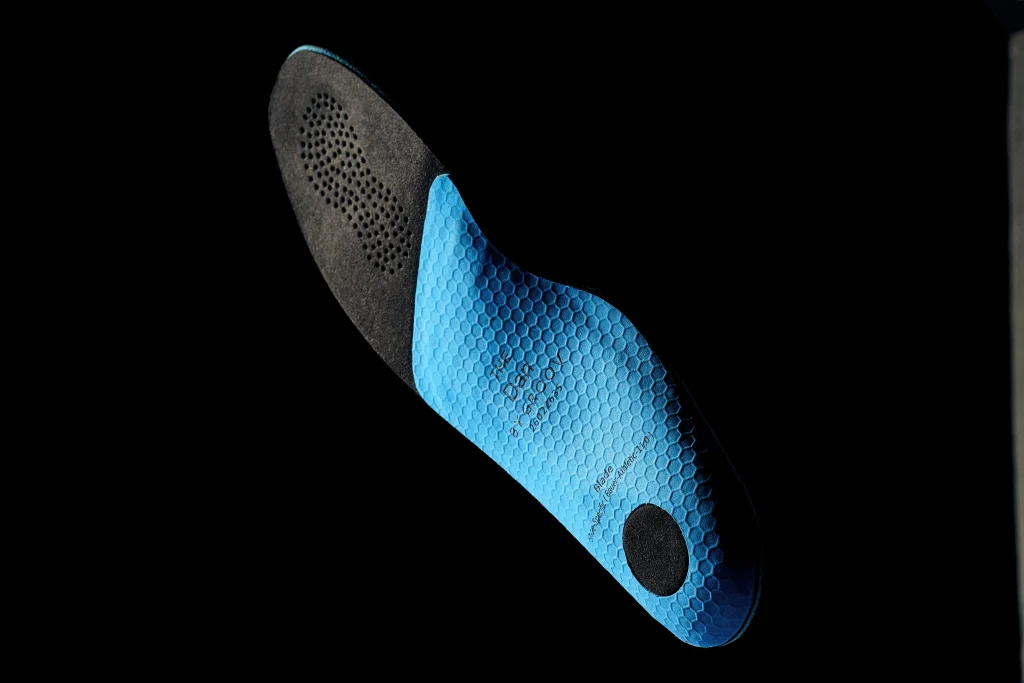
It would be easy to tell the Groov story through its most dramatic moments: the panic attack that pushed Cataldi to reconsider his career, the Wharton class project, the University of Alabama pilot, the brief encounter with Von Miller, and the 10,000 people who suddenly appeared on a waitlist.
Those moments make good headlines. The more useful part of the story is everything that happened between them.
Cataldi kept putting the idea in situations where reality could challenge it. He put prototypes under people’s feet, listened to customers, watched what they actually did, adjusted the experience when people did not want complexity, brought in people with skills he did not have, and continued working even when he did not feel completely certain that the company would become what he imagined.
That approach is particularly relevant for small business owners because most do not have the resources to spend years developing something in isolation. They need feedback quickly. They need to know whether customers care. They need to learn where money is being wasted, where friction is hurting sales, and which parts of the idea deserve more investment.
Cataldi’s metaphor of building with blocks captures that process surprisingly well. You do not need proof that the entire tower in your imagination will eventually stand before putting the first pieces together. You need enough confidence to place the next block, enough humility to notice when it falls, and enough persistence to use what you learned when you try again.
That may be a less glamorous version of entrepreneurial conviction than the stories we usually hear.
It is also far more useful.
Frequently Asked Questions
Who is Dan Cataldi?
Dan Cataldi is the founder of Groov, a personalized footwear company that creates custom insoles using smartphone-based foot scanning. Before starting Groov, Cataldi worked in corporate strategy and later attended Wharton, where the original idea developed through an Innovations course.
How did Groov get started?
Groov began as a Wharton class project inspired partly by Cataldi’s experiences with custom orthotics and his observation that elite athletes placed unusual importance on personalized inserts. He continued developing the concept after the course and later secured the University of Alabama football team as a paying pilot customer.
How did Groov validate the business idea?
Groov initially tested prototypes with different types of users and paid attention to what customers did after trying them. Cataldi points to paying customers, repeat purchases, the Alabama pilot, and low early refund activity as much stronger validation than people simply saying they liked the concept.
How did Von Miller become involved with Groov?
Cataldi met Von Miller while scanning athletes at the NFL Sack Summit. After Miller received and tried the product, he shared it with his Instagram audience, which Cataldi says resulted in approximately 10,000 pre-launch waitlist signups. Miller later became an investor and brand ambassador.
What can small businesses learn from Groov?
Groov’s story highlights the importance of testing ideas with real customers, paying attention to behavior rather than compliments, keeping complicated products easy to use, preparing operations before a surge in demand, and allowing evidence to shape business decisions.
What does “conviction is built, not bestowed” mean?
Cataldi uses the idea to challenge the belief that entrepreneurs need complete confidence before they begin. His experience suggests that conviction often develops gradually: you take a reasonable step, see what happens, gather evidence, adjust, and gain enough confidence to decide whether another step makes sense.