


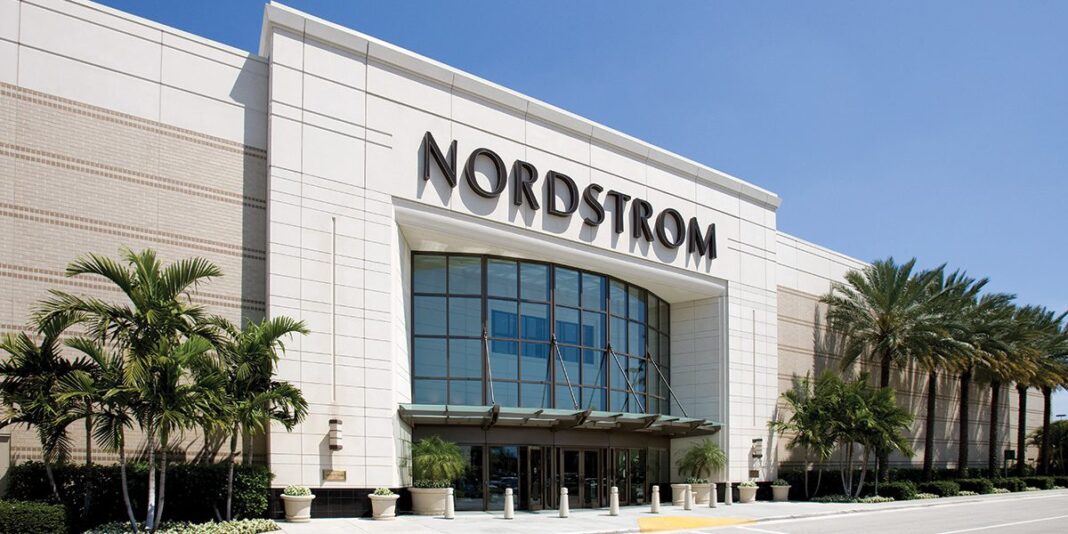
Email is still one of the most effective tools for building customer relationships and driving sales. Nordstrom shows how to do it right — using emails that are timely, beautiful, and personal. From trend highlights to loyalty rewards and transparent communication, learn how you can apply Nordstrom’s strategies to your own small business and keep your audience truly engaged.
Email marketing has come a long way since the early 2000s, but it remains one of the most effective tools for building meaningful customer relationships. While social media, SMS, and push notifications all compete for attention, email consistently outperforms them when it comes to driving engagement and sales.
Few companies have mastered the art of using email as effectively as Nordstrom. The luxury retailer has built a reputation for crafting customer-centric, timely, and visually appealing emails that not only sell but also strengthen loyalty.
This article explores how Nordstrom uses email to engage customers, the types of campaigns they send, and what small businesses can learn from their approach.
Key Takeaways
- Email remains a high-ROI marketing channel. It delivers consistent results when executed with strategy and empathy.
- Nordstrom’s approach blends storytelling and utility. Their emails feel like a conversation, not a sales pitch.
- Transparency and authenticity build trust. Owning up to issues (like outages) enhances credibility.
- Segmentation and personalization are essential. Tailored content drives engagement and loyalty.
- Small businesses can replicate success. With the right tone, visuals, and timing, even simple emails can make a big impact.
Table of Contents

Why Email Marketing Still Works
Email marketing remains the backbone of many successful digital strategies — and for good reason. It’s personal, measurable, and cost-effective.
According to HubSpot’s 2025 Email Marketing Report, for every $1 spent on email, businesses earn an average of $36 in return. That’s an ROI hard to beat by most other channels.
With email, you can:
- Build stronger relationships by speaking directly to your customers.
- Encourage repeat purchases with exclusive deals or updates.
- Personalize communication based on customer interests or behavior.
- Measure open rates, clicks, and conversions to improve future campaigns.
Nordstrom’s strategy shows that when done right, email doesn’t just sell — it deepens trust and elevates the brand experience.
Nordstrom’s Email Strategy: Blending Style, Relevance, and Timing
Nordstrom has long been known for its customer-first philosophy, and its email marketing reflects that. Each campaign feels personal, timely, and on-brand — whether it’s announcing a sale or simply showcasing a new collection.
Here are eight ways Nordstrom uses email to engage its customers, build loyalty, and keep their brand top-of-mind.
1. Featuring Existing Brands and Designer Collaborations
Nordstrom regularly spotlights the many designer brands it carries. These emails are more than just product listings — they tell a story.
For example, an email might highlight Tory Burch’s summer footwear collection alongside matching handbags and apparel. The visuals are clean, the message is aspirational, and the call-to-action (“Shop the Collection”) is direct.
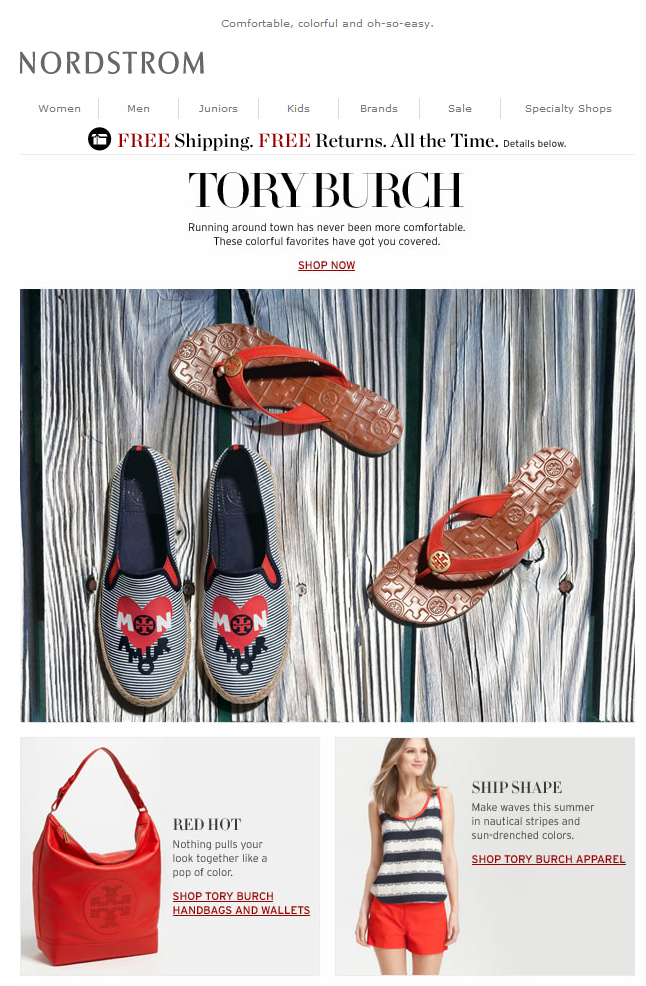
Takeaway: If you sell multiple brands or product lines, dedicate emails to each. Showcase curated looks or collections to inspire your audience rather than overwhelming them with options. Customers appreciate focus and tastefully presented choices.
2. Highlighting Trends and Seasonal Must-Haves
Nordstrom excels at connecting with customers’ desire to stay current. Whether it’s bold summer colors or cozy fall textures, their emails highlight trends that align with the season.
A simple subject line like “Your Fall Capsule Wardrobe Starts Here” can instantly spark interest. Inside, readers see curated pieces — not hundreds of options — with expert styling notes and direct purchase links.
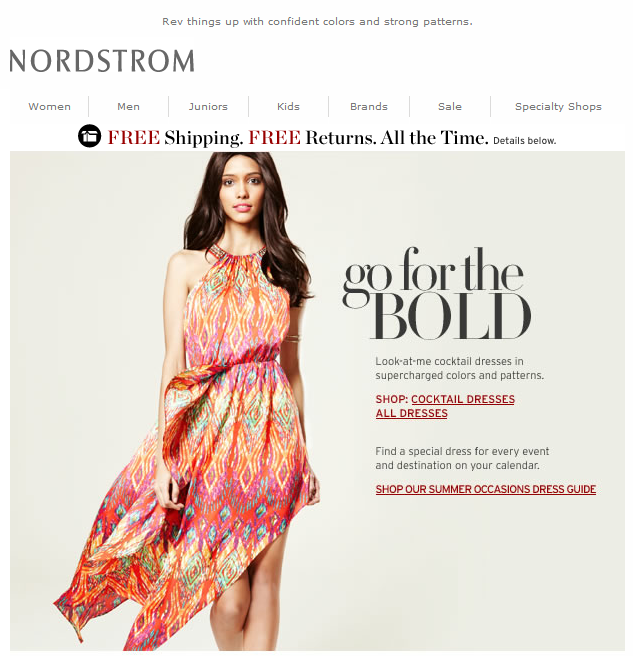
Small business tip: You don’t have to be a fashion retailer to highlight trends. If you sell handmade goods, tech accessories, or home décor, show how your products fit into current lifestyles, events, or seasons.
3. Announcing Limited-Time Offers and Special Deals
Urgency is a powerful motivator. Nordstrom uses time-sensitive email campaigns to drive immediate action — such as a “Buy 2, Get 1 Free” mascara promotion or “Ends Tonight” reminders for clearance sales.
These emails are simple, visual, and driven by clear deadlines. Often, Nordstrom follows up with reminder emails before the offer expires, creating a sense of scarcity.
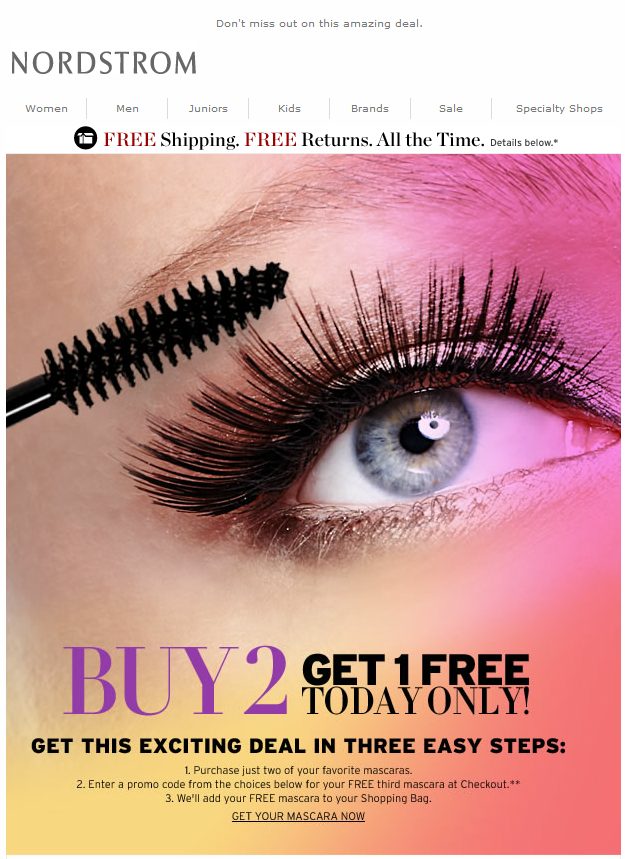
Lesson for small businesses:
Include a deadline or countdown in your emails to create urgency. Even modest discounts or bonuses can trigger action when paired with clear time limits.
4. Building Excitement Around Sales Events
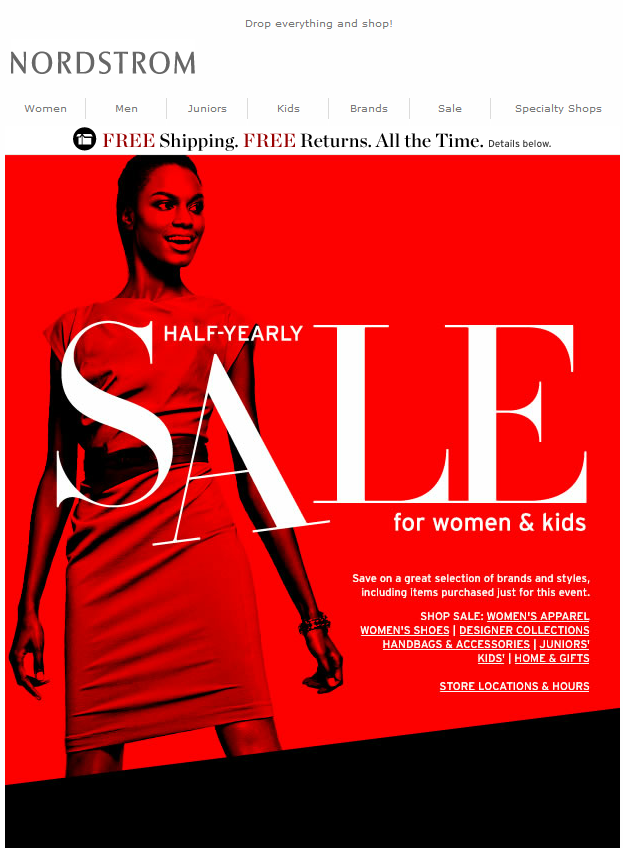
One of Nordstrom’s most iconic campaigns is its Anniversary Sale, a highly anticipated event where new arrivals are offered at discounted prices.
The company sends a series of pre-event emails — “Early Access is Coming” or “Your Sneak Peek Starts Now” — to build anticipation. Loyalty members receive early access, reinforcing the value of being part of Nordstrom’s rewards program.
During the sale, Nordstrom sends multiple reminder emails, each focusing on specific categories (like women’s boots or men’s jackets). The key is variety without redundancy — each email feels fresh but consistent in design and tone.
For small businesses:
If you’re running a big promotion or product launch, don’t limit yourself to one announcement. Plan a sequence — a teaser, a launch email, and a reminder — to sustain engagement throughout the campaign.
5. Spotlighting a Specific Product Category
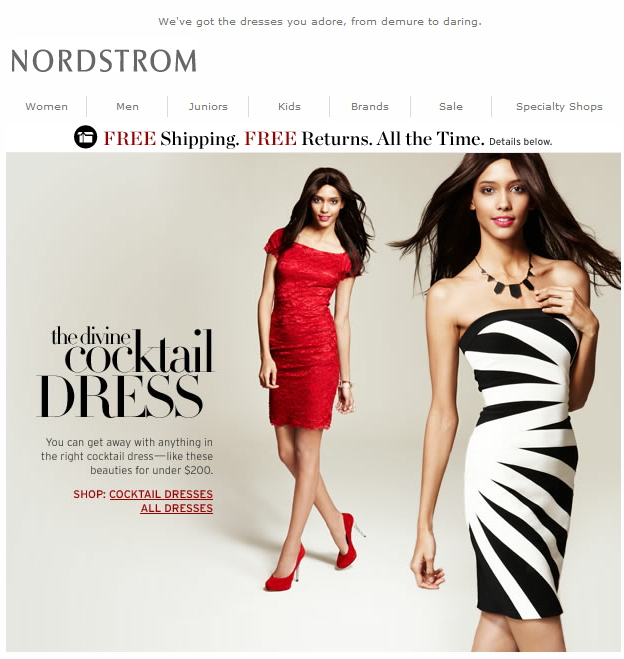
Nordstrom also uses email to educate and inspire around a single category. One week might focus on “Best-Selling Denims,” another on “Cocktail Dresses Under $200,” or “Top Summer Sandals.”
These campaigns often include editorial-style layouts, mixing lifestyle photography with product links. They help customers visualize how the pieces fit into their lives.
What you can do:
If you sell multiple products, segment your emails by category or audience interest. Send one email to fitness enthusiasts about new yoga gear, and another to professionals about office-ready wear. Segmentation increases relevance — and relevance drives sales.
6. Rewarding Loyalty Program Members
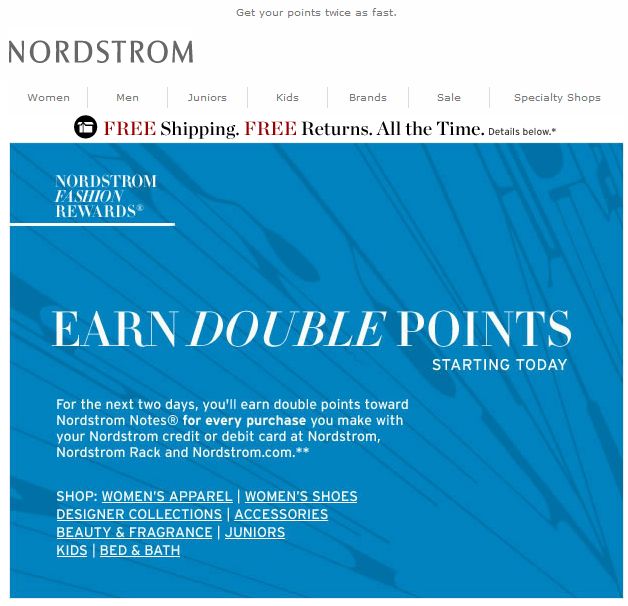
Nordstrom’s Fashion Rewards Program is a masterclass in retention marketing. Members earn points for every dollar spent, leading to rewards called “Nordstrom Notes.”
But Nordstrom doesn’t stop there — it keeps members engaged with exclusive perks: early sale access, bonus point days, private events, and more. Emails are key to maintaining that connection.
For example, Nordstrom sends “Double Your Points This Weekend” announcements, reminding members that they can earn faster rewards if they shop now.
For smaller brands:
Even if you can’t offer a full rewards program, consider smaller loyalty initiatives. You might send special discount codes to repeat customers, “thank you” emails for milestones, or early access to new arrivals.
7. Introducing New or Exclusive Brands
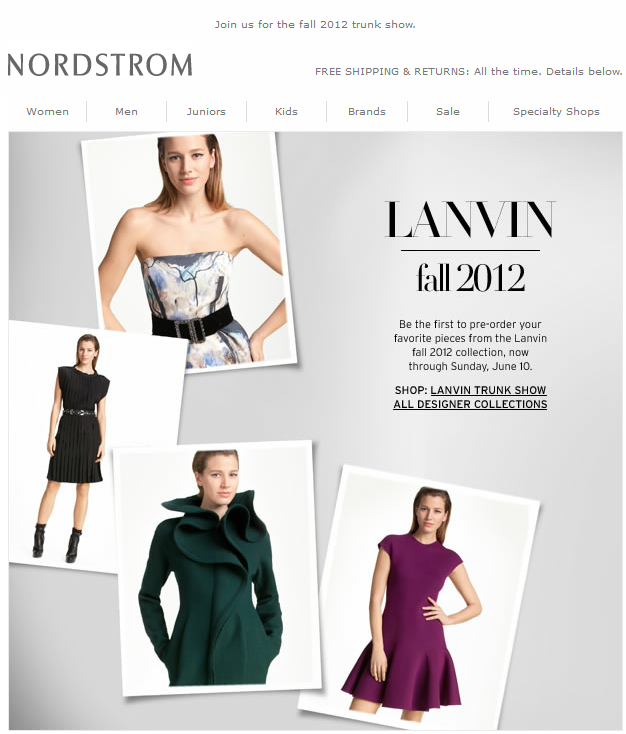
Nordstrom frequently adds new designers and collections, and email plays a big role in introducing them. When the retailer added Lanvin, the French luxury label, it announced it through a visually rich email featuring key pieces and an invitation to “Pre-Order Now.”
This approach not only drives sales but also enhances Nordstrom’s brand perception as a trend-setting destination for fashion discovery.
Tip:
When you add new products, share the story behind them. People connect emotionally with the “why” — whether it’s a sustainable brand, a local artisan, or an innovative product line.
8. Communicating with Transparency During Outages or Issues
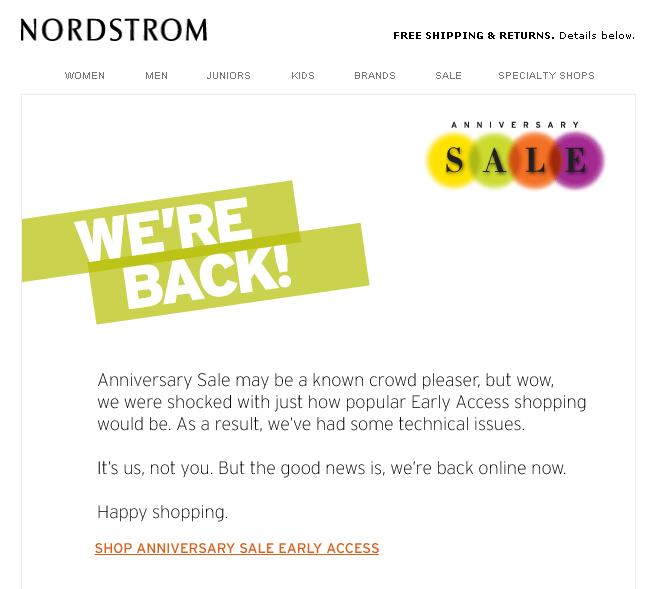
Even big brands face hiccups. During one Anniversary Sale, Nordstrom’s website crashed due to overwhelming demand. Instead of ignoring the issue, the company sent an apology email acknowledging the downtime.
It read:
“It’s us, not you. But the good news is, we’re back online now.”
This simple, human tone turned a potential PR issue into a moment of connection. Customers appreciated the honesty — and Nordstrom maintained trust.
Lesson:
Transparency goes a long way. If your website crashes, shipments are delayed, or inventory runs out, communicate early and clearly. Customers are forgiving when they feel respected.
How Small Businesses Can Apply Nordstrom’s Email Marketing Lessons
You don’t need Nordstrom’s budget or design team to create powerful email campaigns. Here’s how to adapt their best practices on a smaller scale:
- Segment your audience.
Send tailored messages to different customer groups (e.g., repeat buyers, first-time customers, high-value clients). - Personalize whenever possible.
Include the recipient’s name, recommend products based on past purchases, or acknowledge special dates like birthdays. - Keep visuals clean and mobile-friendly.
Over 70% of emails are opened on mobile devices. Use large fonts, clear buttons, and short paragraphs. - Maintain consistent branding.
Use the same color palette, logo placement, and tone across all emails so your messages are instantly recognizable. - Test and learn.
Experiment with subject lines, send times, and layouts. Measure open and click-through rates to understand what resonates best. - Automate key touchpoints.
Set up welcome emails, abandoned cart reminders, and thank-you messages to stay connected without manual effort. - Provide real value.
Not every email should sell. Mix in educational, inspirational, or entertaining content to keep subscribers engaged.
The Power of Authentic Connection
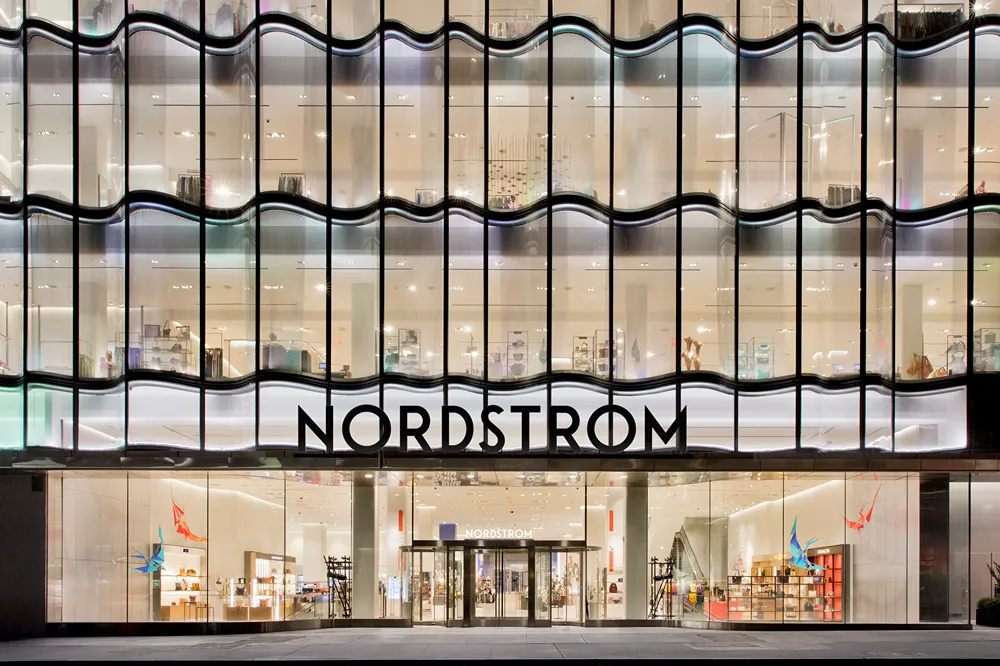
Nordstrom’s success with email marketing isn’t about flashy graphics or deep discounts — it’s about authentic connection. Every message reflects the brand’s values: quality, service, and style.
For small businesses, that’s the ultimate takeaway. The most effective emails are the ones that feel personal, useful, and genuine. Whether you’re announcing a new product or saying “thank you,” what matters most is that your customers feel seen and valued.
FAQs
Why is email marketing still important in 2025?
Email remains one of the most cost-effective marketing channels, with high ROI and direct reach. Unlike social media algorithms that limit visibility, email goes straight to your customer’s inbox. It allows personalization, automation, and measurable performance — all critical for businesses looking to build loyal audiences and consistent sales.
What makes Nordstrom’s email marketing effective?
Nordstrom’s emails stand out because they combine clean visuals, clear calls to action, and genuine communication. They don’t just promote — they tell stories, highlight trends, and make the customer feel part of an exclusive community. Their mix of promotional, informational, and loyalty-based emails ensures subscribers always find value.
How can small businesses create effective email campaigns without a big budget?
Start small. Use free or low-cost tools like Mailchimp or Brevo (formerly Sendinblue). Focus on clear design, short text, and strong subject lines. Offer useful content — tips, updates, or sneak peeks — not just sales. Most importantly, send consistently so your brand stays familiar to your audience.
How often should businesses send marketing emails?
There’s no one-size-fits-all answer, but consistency matters more than frequency. Many small businesses succeed with 1–2 emails per week. Too many messages can cause unsubscribes; too few can lead to disinterest. Test your schedule and monitor open and click rates to find the sweet spot.
What kind of content should be included in email marketing?
Mix it up. Include product news, seasonal trends, exclusive offers, customer stories, or educational content that solves a problem. The goal is to keep readers engaged — not overwhelmed. Like Nordstrom, balance selling with storytelling.
This article was first published on August 13, 2012 and updated on October 30, 2025.

Nordstrom utilizes email marketing in a simple but effective manner. Featuring sales is a good tactic because most buyers prefer to buy marked-down items.
Nordstrom utilizes email marketing in a simple but effective manner. Featuring sales is a good tactic because most buyers prefer to buy marked-down items.